

Georgetown University
Law Center
Building systems replaced floor by floor in an occupied law school, on day and night shifts.
Project Overview
Georgetown University Law Center needed its heating and cooling units replaced floor by floor without closing a building full of classrooms, faculty offices, and conference rooms. ENGIE North America, the University's energy management company, selected Kimball as prime contractor for the work at 500 First Street NW and the Williams Law Library.
How We Delivered
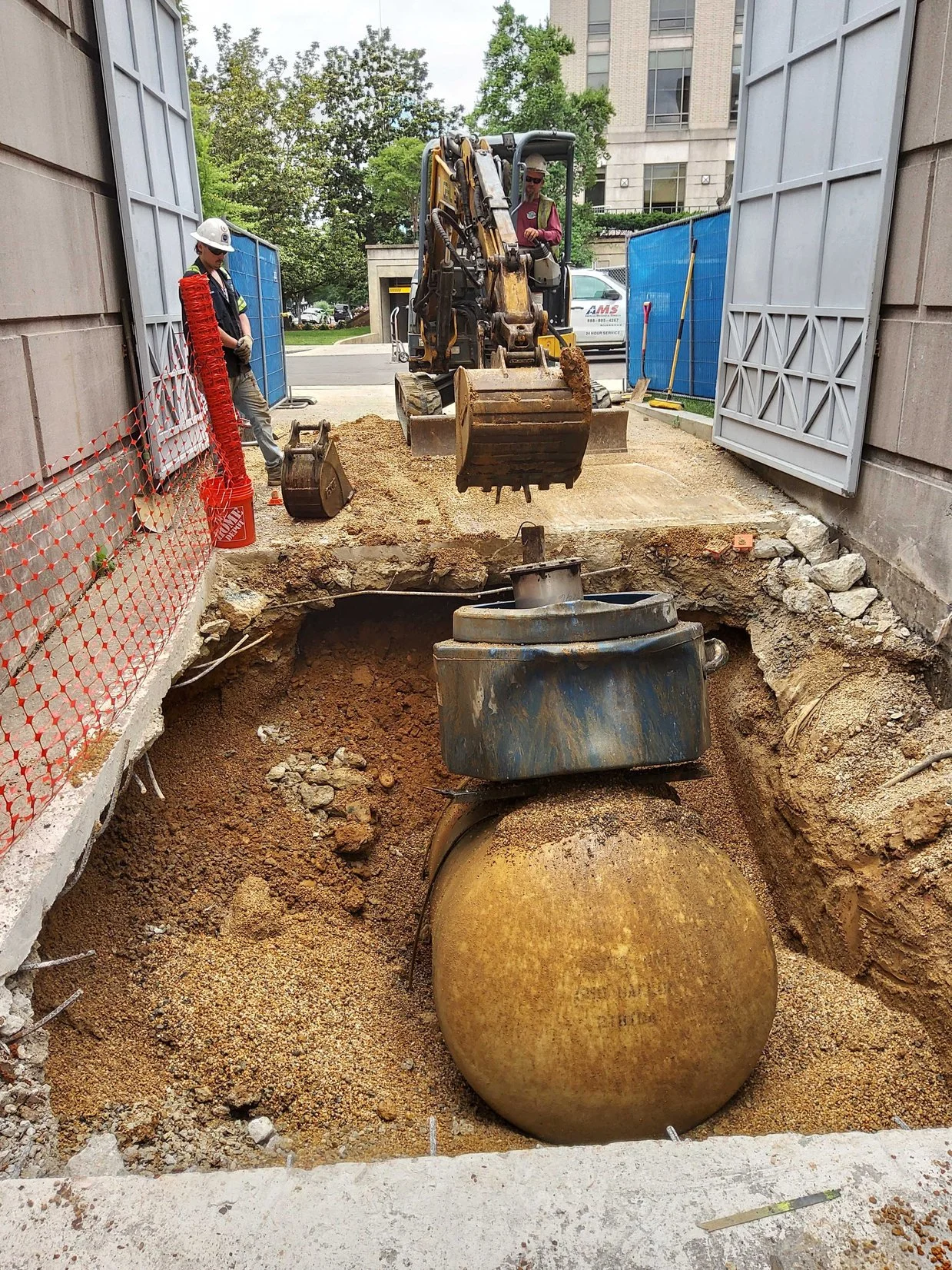
The schedule was built around the school. Fan coil work ran at night, with furniture moved out and back so each room reopened the next morning, and riser work was planned around exams and holidays. The tank replacement ran on day shift, with crane operations coordinated around loading dock deliveries.
Scope of Work
Mechanical Systems
Replaced 327 fan coil units across nine floors
Installed 1,300 valves and 322 access panels on the water risers
Installed new control cabling and thermostats tied into the building automation system
Library & Fuel Tank
Replaced the fan coil unit at the Williams Law Library main entrance
Removed and replaced the underground fuel oil tank at the loading dock
Abatement & Controls
Abated asbestos found on riser piping under containment
Installed dust control and air quality measures for drywall work
Key Challenges
Replacing building systems in an occupied academic facility
Running day and night shifts under one project team
Finding asbestos on riser piping mid-project
Coordinating crane operations and traffic at the loading dock
Outcomes
Returned each room to use the next morning with heating and cooling restored
Enabled individual risers and branches to be isolated for service
Returned each space to its users on schedule